The Row Tote Bags in Plain Comparison: Park, Marlo, Alger and Everything Else
Which tote should you actually buy? Answering that is messier here than it is at other labels, as the row bags are not built around an easily read good-better-best ladder. You get no hierarchy of logos, no house print reserved for the top-end versions, and no visible hardware declaring which model outranks which. The same unsigned grammar covers both a $900 tote and a $6,900 one. What actually separates them is leather grade, structure, size and how much hand-finishing the construction takes. The comparison below sets the tote families side by side using observed 2026 market prices, so you can see what those extra thousands are paying for.
First, Decide How Much Capacity You Need
Size, not model names, is where every sound tote decision starts. The range runs from a small structured carrier to a truly oversized weekend piece, and the gap between those extremes is wider than most expect. Sizing follows a house convention worth learning: where a number appears in a model name, it is the bag’s width in inches, which is why Marlo 12 and Marlo 14 differ by two inches across the top. That convention runs from Margaux 10, 12 and 15 to India 10.00 and Agnes 15. Once you have settled the width you need, you are holding two or three candidates in short order. The rest of the decision is material and budget.
The Park Line: The Group Most People Have in Mind
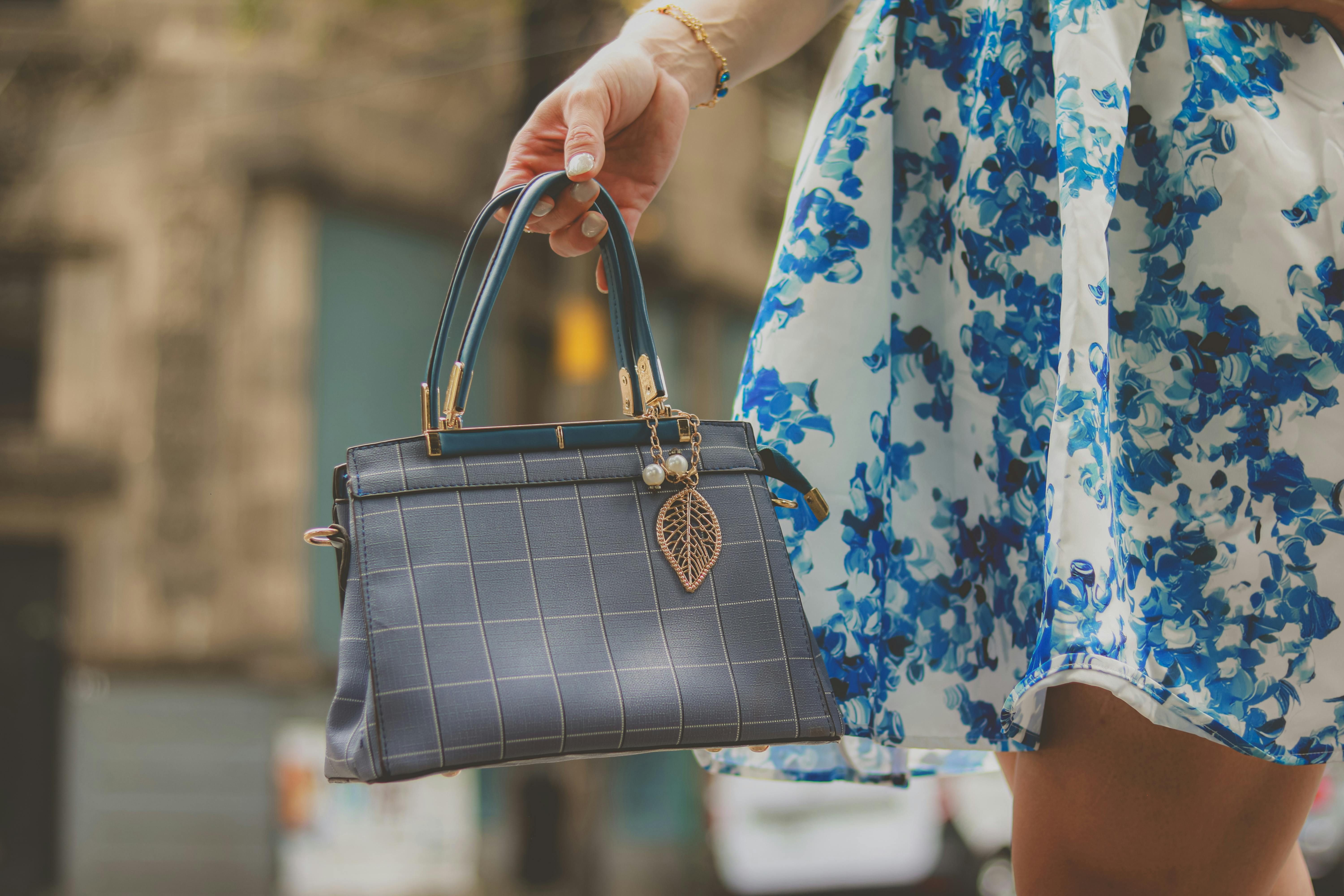
Mention the row tote bag and the Park line is almost always what is meant. It is the most visible group in the range and the one that turned a soft-sided carrier into a readable silhouette. It runs to precisely four bags plus a crossbody: yslsale.org the N/S Park Tote, the Park Tote, the Park Tote Three and the XL Park Tote, with the N/S Park Crossbody rounding the group out. You will see other Park names circulating online that the brand does not make, so be specific. They all obey the same design logic: no exterior plaque, no monogram, palladium-plated matte hardware, recognition by proportion alone. Dimension and material separate them; decoration never does.
N/S Park Tote
The N/S Park Tote is the tall, north-south cut and the family’s centre of gravity. Pricing observed in 2026 sits at roughly $1,550 to $1,620 for the small, $1,650 to $1,950 for the medium and $1,990 to $3,250 for the large. Those are ranges rather than single figures because material changes the number noticeably within one size. The large covers a particularly wide band, which tells you the same silhouette is offered in noticeably different hides. This is also the model with the strongest documented resale record in the whole range, which matters if you care about what happens after purchase. The medium is the practical everyday choice for most buyers.
Park Tote, Park Tote Three and XL Park Tote
The standard Park Tote sits slightly below the N/S in observed pricing, at roughly $1,450 to $1,620 across small and medium. The Park Tote Three, offered in edge, stitch and canvas treatments, runs approximately $1,750 to $2,400 depending on which of those you choose. At $2,490 for the XL Park Tote against $4,570 for the XL Stitched, nothing shows the cost of handwork more clearly. The family and the silhouette are the same; the price is nearly double, and the difference is construction rather than size. Want the largest format without the stitched premium? The plain XL is the obvious pick. Take the stitching and the price reaches flagship money for a tote.
Marlo: Structure Where Park Collapses
Marlo is doing something else entirely. Where the Park bags read soft and collapsible, Marlo is the structured, more formal proposition, and the pricing says so at once. Figures observed in 2026 put Marlo 12 at $3,600 and $4,900 depending on material, Marlo 14 at $5,300, and the Marlo Tote at $4,300 with a canvas version at $5,600. Note what happens there: the canvas version is dearer than the leather one, which is a useful reminder that material premiums in this range do not follow a simple leather-beats-fabric rule. Two inches of width separate Marlo 12 from Marlo 14, at several hundred dollars more. Choose Marlo when you need a tote that holds its shape empty and reads as a work bag rather than a carryall.
Alger, Marco and the Top of the Range
Two pieces sit above Marlo and define the ceiling. Observed pricing put the Alger Tote at $4,900 and the Marco Bag at $6,900, level with the Margaux Shoulder 12 at $4,900 and the Iowa Duffle at $5,180. At this level the money does not buy capacity beyond what a large Park already offers. You are buying leather grade, structure and the amount of hand-finishing the construction requires. They turn up in every list of top row bags and still sell slowest, since the value case is a subtle one. Should the difference between a $2,490 tote and a $6,900 one be invisible across a room, that is by design, and probably your answer.
The Less Obvious Picks Most Guides Miss
Stopping at the headline families would make for a poor row bags overview, because several of the most useful totes sit beyond them. The Boone Tote was observed at $900 and the Large Boone at $950, making them the least expensive entry into the format. Brian Tote figures landed at $1,100 and $1,200, and Tori at $1,800. Away from leather, the sisal family runs about $1,400 to $2,200, with a Georgia linen tote at $1,750 and a Geogica raffia tote at $2,500. On the smaller side sit the Cecily Mini Tote at $950, the Mini Barn Tote at $1,200 and a Small Kit Tote at $2,200. These are the options for buyers who want the design language without the leather outlay.
- Least expensive: Boone Tote at $900, Large Boone at $950.
- Daily leather: Brian Tote at $1,100 to $1,200, Tori at $1,800.
- Textiles and seasonal pieces: sisal $1,400 to $2,200, linen $1,750, raffia $2,500.
- The small end: Cecily Mini Tote $950, Mini Barn Tote $1,200.
The Whole Comparison in One View
The table gathers the observed 2026 prices so the families can be read against one another directly. Treat every figure as a market observation at a point in time rather than an official tariff, because the brand publishes no master price list. A range means genuine variation across materials inside one size, not uncertainty about the number. Read down the price column first, then across to character. Notice how far the top of the Park range overlaps the bottom of Marlo. It is in that overlap that most buyers waver.
| Bag | Observed 2026 price | Personality | Ideal for |
|---|---|---|---|
| Park Tote (S/M) | $1,450-1,620 | Soft and collapsible | Casual carry |
| N/S Park Tote Small | $1,550-1,620 | Cut tall | The compact commute |
| N/S Park Tote Medium | $1,650-1,950 | Tall proportion | The default choice |
| Park Tote Three | $1,750-2,400 | Three treatments: edge, stitch, canvas | Choosing a material |
| N/S Park Tote Large | $1,990-3,250 | The full size | Working and travelling |
| XL Park Tote | $2,490 | Outsized | Sheer volume |
| Marlo 12 | $3,600 / $4,900 | Holds its shape | Formal working days |
| Marlo Tote | $4,300 (canvas $5,600) | Firmly structured | Statement carrying |
| XL Park Tote Stitched | $4,570 | Hand-finished | Paying for craft |
| Alger Tote | $4,900 | Flagship tote | The top-tier buyer |
| Marlo 14 | $5,300 | The largest Marlo | The wide format |
| Marco Bag | $6,900 | Top of the range | Collector purchase |
What the Resale Data Reveals About Totes
Resale is where the tote conversation gets genuinely interesting, and one figure dominates it. In Rebag’s CLAIR 2025 report the N/S Park Tote recorded 146% value retention, the strongest performer of the entire brand study. The Row came in at 97% retention brand-wide in the same report, crossing into the unicorn tier of 85% and above for the first time, behind only Telfar, Hermes and Goyard, with the Margaux Tote at 107%. All of that is observed market behaviour and nothing more, so treat it as context rather than investment advice or a promise about future value. The pattern does not hold across the board either: canvas, nylon, sisal and seasonal-colour pieces routinely discount on the secondary market. Strength sits with black and neutral calfskin in the signature silhouettes, a narrower story than the headline number suggests.
Choosing in Four Steps
Work through it in order instead of browsing by price and the decision becomes straightforward. Start by fixing the width, since the number in the model name states exactly what you are getting. Then decide on structure or slouch, since that choice separates Marlo from Park more cleanly than anything else. Material follows, keeping in mind that canvas can cost more than leather inside the same family and that textile pieces behave differently over time. Leave price until last, when it applies to two or three options instead of fifteen. The ordered list below is the same process in short form.
- Fix the width you need, in inches, before looking at names.
- Decide between structured Marlo and soft-sided Park.
- Pick material, knowing canvas sometimes costs more than leather here.
- Weigh the two or three survivors against observed price.
Leave a Reply